Start with the situation before the implementation
10 signals frame the real scope before the solution appears
What needed to change
5 friction points identified before moving into execution
The store relied on manual stock checks inside the storage room
Employees had to physically verify product availability multiple times per day
Frequent sales errors caused by selling unavailable products
Slow checkout process due to lack of real-time visibility
Why it mattered to the business
5 business consequences made the problem impossible to ignore
Lost sales when unavailable products were only discovered at checkout
Time wasted on repetitive stock verification tasks
Poor customer experience due to long waiting times
Unreliable understanding of inventory levels and actual revenue
Move from diagnosis into deliberate decisions
7 trade-offs explain how the solution took shape
Why these choices held up
A focused view of the structural decisions that shaped the final system.
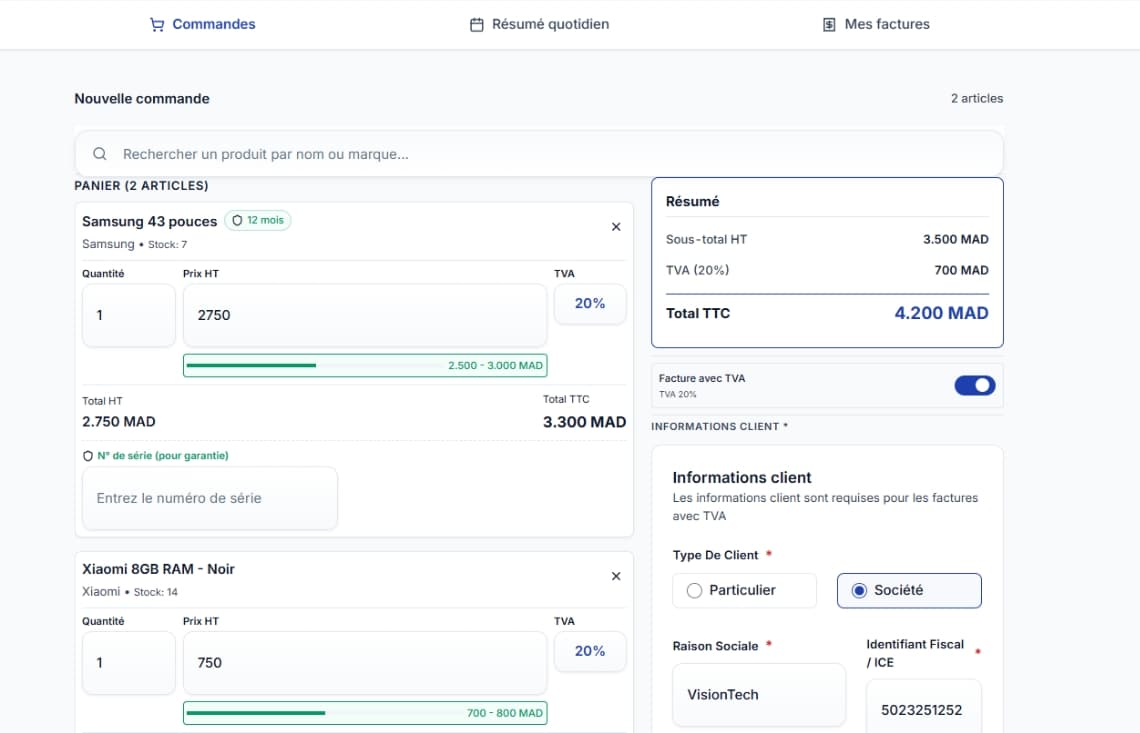
Connected inventory directly to the checkout process (real-time sync)
Introduced multi-product orders instead of single-product checkout
Added stock threshold alerts to anticipate shortages
Implemented flexible pricing (min/max) to support negotiation scenarios
Keep the architecture readable at a glance
A shorter systems view up front, with deeper engineering details available later.
How the core pieces fit together
5 structural patterns describe the blueprint without dropping into full technical depth
Separated product entity from stock entity to prevent data duplication
Each stock batch stores its own purchase price for accurate accounting
Implemented FIFO logic for precise profit calculation
Used status-based operations for cancel/return with automatic stock recovery
What changed after shipping
5 measurable improvements surface the outcome without forcing a deep read
What improved after launch
A concise outcome layer first, with the full set available on demand.
Stock availability became visible instantly during checkout
Cashiers could process multi-product orders within a single flow
Profit tracking moved from estimation to precise batch-based calculation
Returns and cancellations restored stock through system-defined rules
Detailed architecture, guarantees, and code paths stay available for engineers without overwhelming the main story.